Saturday, December 20, 2014

Earl Nightingale - The Strangest Secret Article

Transcribed from The Strangest Secret audio program by Earl Nightingale


Earl Nightingale (March 12, 1921 – March 28, 1989) was an American motivational speaker and author, known as the "Dean of Personal Development." He was the voice in the early 1950s of Sky King, the hero of a radio adventure series, and was a WGN radio show host from 1950 to 1956. Nightingale was the author of the Strangest Secret, which economist Terry Savage has called “…One of the great motivational books of all time“.
Nightingale was born in Los Angeles in 1921. His father, Earl the 4th, abandoned his mother in 1933. After his father left, his mother moved the family to a tent in Tent City. Diana Nightingale is the widow of Earl Nightingale. Diana has continued the legacy of Earl's message and the key to success, “We Become What We Think About”.


Some years ago, the late Nobel prize-winning Dr. Albert Schweitzer was asked by a reporter, “Doctor, what’s wrong with men today?” The great doctor was silent a moment, and then he said, “Men simply don’t think!”

It’s about this that I want to talk with you. We live today in a golden age. This is an era that humanity has looked forward to, dreamed of, and worked toward for thousands of years. We live in the richest era that ever existed on the face of the earth … a land of abundant opportunity for everyone.

However, if you take 100 individuals who start even at the age of 25, do you have any idea what will happen to those men and women by the time they’re 65? These 100 people believe they’re going to be successful. They are eager toward life, there is a certain sparkle in their eye, an erectness to their carriage, and life seems like a pretty interesting adventure to them.

But by the time they’re 65, only one will be rich, four will be financially independent, five will still be working, and 54 will be broke” depending on others for life’s necessities.

Only five out of 100 make the grade! Why do so many fail? What has happened to the sparkle that was there when they were 25? What has become of the dreams, the hopes, the plans … and why is there such a large disparity between what these people intended to do and what they actually accomplished?

THE DEFINITION OF SUCCESS

First, we have to define success and here is the best definition I've ever been able to find: “Success is the progressive realization of a worthy ideal.”

A success is the school teacher who is teaching because that’s what he or she wants to do. A success is the entrepreneur who start his own company because that was his dream” that’s what he wanted to do. A success is the salesperson who wants to become the best salesperson in his or her company and sets forth on the pursuit of that goal.

A success is anyone who is realizing a worthy predetermined ideal, because that’s what he or she decided to do … deliberately. But only one out of 20 does that! The rest are “failures.”

Rollo May, the distinguished psychiatrist, wrote a wonderful book called Man’s Search for Himself, and in this book he says: “The opposite of courage in our society is not cowardice … it is conformity.” And there you have the reason for so many failures. Conformity ” people acting like everyone else, without knowing why or where they are going.

We learn to read by the time we’re seven. We learn to make a living by the time we’re 30. Often by that time we’re not only making a living, we’re supporting a family. And yet by the time we’re 65, we haven’t learned how to become financially independent in the richest land that has ever been known. Why? We conform! Most of us are acting like the wrong percentage group — the 95 who don’t succeed.

GOALS

Have you ever wondered why so many people work so hard and honestly without ever achieving anything in particular, and why others don’t seem to work hard, yet seem to get everything? They seem to have the “magic touch.” you've heard people say, “Everything he touches turns to gold.” Have you ever noticed that a person who becomes successful tends to continue to become more successful? And, on the other hand, have you noticed how someone who’s a failure tends to continue to fail?

The difference is goals. People with goals succeed because they know where they’re going. It’s that simple. Failures, on the other hand, believe that their lives are shaped by circumstances … by things that happen to them … by exterior forces.

Think of a ship with the complete voyage mapped out and planned. The captain and crew know exactly where the ship is going and how long it will take” it has a definite goal. And 9,999 times out of 10,000, it will get there.

Now let’s take another ship ” just like the first” only let’s not put a crew on it, or a captain at the helm. Let’s give it no aiming point, no goal, and no destination. We just start the engines and let it go. I think you’ll agree that if it gets out of the harbor at all, it will either sink or wind up on some deserted beach ” a derelict. It can’t go anyplace because it has no destination and no guidance.

It’s the same with a human being. However, the human race is fixed, not to prevent the strong from winning, but to prevent the weak from losing. Society today can be likened to a convoy in time of war. The entire society is slowed down to protect its weakest link, just as the naval convoy has to go at the speed that will permit its slowest vessel to remain in formation.

That’s why it’s so easy to make a living today. It takes no particular brains or talent to make a living and support a family today. We have a plateau of so-called “security.” So, to succeed, all we must do is decide how high above this plateau we want to aim.

Throughout history, the great wise men and teachers, philosophers, and prophets have disagreed with one another on many different things. It is only on this one point that they are in complete and unanimous agreement” the key to success and the key to failure is this:

WE BECOME WHAT WE THINK ABOUT


This is The Strangest Secret! Now, why do I say it’s strange, and why do I call it a secret? Actually, it isn’t a secret at all. It was first promulgated by some of the earliest wise men, and it appears again and again throughout the Bible. But very few people have learned it or understand it. That’s why it’s strange, and why for some equally strange reason it virtually remains a secret.

Marcus Aurelius, the great Roman Emperor, said: “A man’s life is what his thoughts make of it.”

Disraeli said this: “Everything comes if a man will only wait … a human being with a settled purpose must accomplish it, and nothing can resist a will that will stake even existence for its fulfillment.”

William James said: “We need only in cold blood act as if the thing in question were real, and it will become infallibly real by growing into such a connection with our life that it will become real. It will become so knit with habit and emotion that our interests in it will be those which characterize belief.” He continues, ” … only you must, then, really wish these things, and wish them exclusively, and not wish at the same time a hundred other incompatible things just as strongly.”

My old friend Dr. Norman Vincent Peale put it this way: “If you think in negative terms, you will get negative results. If you think in positive terms, you will achieve positive results.” George Bernard Shaw said: “People are always blaming their circumstances for what they are. I don’t believe in circumstances. The people who get on in this world are the people who get up and look for the circumstances they want, and if they can’t find them, make them.”

Well, it’s pretty apparent, isn’t it? We become what we think about. A person who is thinking about a concrete and worthwhile goal is going to reach it, because that’s what he’s thinking about. Conversely, the person who has no goal, who doesn’t know where he’s going, and whose thoughts must therefore be thoughts of confusion, anxiety, fear, and worry will thereby create a life of frustration, fear, anxiety and worry. And if he thinks about nothing … he becomes nothing.

AS YE SOW, SO SHALL YE REAP

The human mind is much like a farmer’s land. The land gives the farmer a choice. He may plant in that land whatever he chooses. The land doesn’t care what is planted. It’s up to the farmer to make the decision. The mind, like the land, will return what you plant, but it doesn’t care what you plant. If the farmer plants too seeds” one a seed of corn, the other nightshade, a deadly poison, waters and takes care of the land, what will happen?

Remember, the land doesn’t care. It will return poison in just as wonderful abundance as it will corn. So up come the two plants” one corn, one poison as it’s written in the Bible, “As ye sow, so shall ye reap.”

The human mind is far more fertile, far more incredible and mysterious than the land, but it works the same way. It doesn’t care what we plant … success … or failure. A concrete, worthwhile goal … or confusion, misunderstanding, fear, anxiety, and so on. But what we plant it must return to us.

The problem is that our mind comes as standard equipment at birth. It’s free. And things that are given to us for nothing, we place little value on. Things that we pay money for, we value.

The paradox is that exactly the reverse is true. Everything that’s really worthwhile in life came to us free” our minds, our souls, our bodies, our hopes, our dreams, our ambitions, our intelligence, our love of family and children and friends and country. All these priceless possessions are free.

But the things that cost us money are actually very cheap and can be replaced at any time. A good man can be completely wiped out and make another fortune. He can do that several times. Even if our home burns down, we can rebuild it. But the things we got for nothing, we can never replace.

Our mind can do any kind of job we assign to it, but generally speaking, we use it for little jobs instead of big ones. So decide now. What is it you want? Plant your goal in your mind. It’s the most important decision you’ll ever make in your entire life.

Do you want to excel at your particular job? Do you want to go places in your company … in your community? Do you want to get rich? All you have got to do is plant that seed in your mind, care for it, work steadily toward your goal, and it will become a reality.

It not only will, there’s no way that it cannot. You see, that’s a law” like the laws of Sir Isaac Newton, the laws of gravity. If you get on top of a building and jump off, you’ll always go down” you’ll never go up.

And it’s the same with all the other laws of nature. They always work. They’re inflexible. Think about your goal in a relaxed, positive way. Picture yourself in your mind’s eye as having already achieved this goal. See yourself doing the things you will be doing when you have reached your goal.

Every one of us is the sum total of our own thoughts. We are where we are because that’s exactly where we really want or feel we deserve to be” whether we’ll admit that or not. Each of us must live off the fruit of our thoughts in the future, because what you think today and tomorrow next month and next year will mold your life and determine your future. You’re guided by your mind.

I remember one time I was driving through e a s t e r n Arizona and I saw one of those giant earth moving machines roaring along the road with what looked like 30 tons of dirt in it a tremendous, incredible machine and there was a little man perched way up on top with the wheel in his hands, guiding it. As I drove along I was struck by the similarity of that machine to the human mind. Just suppose you’re sitting at the controls of such a vast source of energy. Are you going to sit back and fold your arms and let it run itself into a ditch? Or are you going to keep both hands firmly on the wheel and control and direct this power to a specific, worthwhile purpose? It’s up to you. You’re in the driver’s seat. You see, the very law that gives us success is a doubleedged sword. We must control our thinking. The same rule that can lead people to lives of success, wealth, happiness, and all the things they ever dreamed of” that very same law can lead them into the gutter. It’s all in how they use it … for good or for bad. That is The Strangest Secret!

Do what the experts since the dawn of recorded history have told us to do: pay the price, by becoming the person you want to become. It’s not nearly as difficult as living unsuccessfully.

The moment you decide on a goal to work toward, you’re immediately a successful person you are then in that rare group of people who know where they’re going. Out of every hundred people, you belong to the top five. Don’t concern yourself too much with how you are going to achieve your goal leave that completely to a power greater than yourself. All you have to do is know where you’re going. The answers will come to you of their own accord, and at the right time.

Start today. You have nothing to lose” but you have your whole life to win.

30-DAY ACTION IDEAS FOR PUTTING THE STRANGEST SECRET TO WORK FOR YOU


For the next 30-days follow each of these steps every day until you have achieved your goal.

1. Write on a card what it is you want more that anything else. It may be more money. Perhaps you’d like to double your income or make a specific amount of money. It may be a beautiful home. It may be success at your job. It may be a particular position in life. It could be a more harmonious family.

Write down on your card specifically what it is you want. Make sure it’s a single goal and clearly defined. You needn't show it to anyone, but carry it with you so that you can look at it several times a day. Think about it in a cheerful, relaxed, positive way each morning when you get up, and immediately you have something to work for something to get out of bed for, something to live for.

Look at it every chance you get during the day and just before going to bed at night. As you look at it, remember that you must become what you think about, and since you’re thinking about your goal, you realize that soon it will be yours. In fact, it’s really yours the moment you write it down and begin to think about it.

2. Stop thinking about what it is you fear. Each time a fearful or negative thought comes into your mind, replace it with a mental picture of your positive and worthwhile goal. And there will come a time when you’ll feel like giving up. It’s easier for a human being to think negatively than positively. That’s why only five percent are successful! You must begin now to place yourself in that group.

“Act as though it were impossible to fail,” as Dorothea Brande said. No matter what your goal if you've kept your goal before you every day you’ll wonder and marvel at this new life you've found.

3. Your success will always be measured by the quality and quantity of service you render. Most people will tell you that they want to make money, without understanding this law. The only people who make money work in a mint. The rest of us must earn money. This is what causes those who keep looking for something for nothing, or a free ride, to fail in life. Success is not the result of making money; earning money is the result of success — and success is in direct proportion to our service.

Most people have this law backwards. It’s like the man who stands in front of the stove and says to it: “Give me heat and then I’ll add the wood.” How many men and women do you know, or do you suppose there are today, who take the same attitude toward life? There are millions.

We’ve got to put the fuel in before we can expect heat. Likewise, we’ve got to be of service first before we can expect money. Don’t concern yourself with the money. Be of service … build … work … dream … create! Do this and you’ll find there is no limit to the prosperity and abundance that will come to you.

Don’t start your test until you’ve made up your mind to stick with it. If you should fail during your first 30 days by that I mean suddenly find yourself overwhelmed by negative thoughts simply start over again from that point and go 30 more days. Gradually, your new habit will form, until you find yourself one of that wonderful minority to whom virtually nothing is impossible.

Above all … don’t worry! Worry brings fear, and fear is crippling. The only thing that can cause you to worry during your test is trying to do it all yourself. Know that all you have to do is hold your goal before you; everything else will take care of itself.

Take this 30-day test, then repeat it … then repeat it again. Each time it will become more a part of you until you’ll wonder how you could have ever have lived any other way. Live this new way and the floodgates of abundance will open and pour over you more riches than you may have dreamed existed. Money? Yes, lots of it. But what’s more important, you’ll have peace … you’ll be in that wonderful minority who lead calm, cheerful, successful lives.

Jim Rohn - Use Your Own Mind, Think, & Make Good Decisions!


Still one of the best people I know that will make you think.


PHILOSOPHY

Philosophy is the chief cornerstone in the foundation of The Five Major Pieces To The Life Puzzle. A major factor in determining how our lives turn out is the way we choose to think. Everything that goes on inside the human mind in the form of thoughts, ideas and information forms our personal philosophy. Our philosophy then influences our habits and behavior, and this is really where it all begins.

ATTITUDE

Our lives are greatly affected by what we know since what we know determines the decisions we will make. Just as we are affected by what we know, we are also affected by how we feel. While philosophy deals essentially with the logical side of life -- information and thinking habits -- attitude focuses primarily on the emotional issues that affect our existence. What we know determines our philosophy. How we feel about what we know determines our attitude.

It is our emotional nature that governs most of our daily conduct in our personal and business worlds. It is the emotional aspect of our experiences that determines our behavior. How we each feel about life’s events is a powerful force that can either freeze us in our tracks or inspire us to take immediate action on any given day. 

Like thoughts, emotions have the capacity to propel us toward future fortune or future disaster. The feelings we carry within us about people, our work, our homes, our finances, and about the world around us collectively form our attitude. With the right attitude human beings can move mountains. With the wrong attitude they can be crushed by the smallest grain of sand. Having the right attitude is an essential prerequisite for success and happiness. The right attitude is one of the fundamentals of the good life. That is why we must constantly examine our feelings about our role in the world and about our possibilities for achieving our dreams. The feelings that we have affect our prevailing attitude, and it is our prevailing attitude that ultimately determines the quality o our lives. Attitude is a major determining factor in how our lives turn out. Since everything in life affects everything else, we must make a careful study of everything and everyone that might be having the wrong affect on our current attitude.

ACTIVITY

There is an ancient story known as the Parable of the Talents. According to the story, one day the master of the household gathered his three servants together and announced that he would soon be going away on a long journey. Before leaving he gave each of his servants a certain number of talents. In those days a talent was worth several years’ wages to the average laborer, so each talent represented a substantial sum of money. To one servant he gave five talents; to another he gave two; and to the third he gave one talent. He cautioned the servants to look after these talents in his absence and then left. While the master was gone the servant with the five talents took them to the marketplace and traded with them until he had converted the five into ten. The second servant did the same, trading his two into four. However, the third servant, being a very cautious man, took the one talent that he had been given and buried it in the ground for safekeeping. After a time the master returned and gathered his three servants together to inquire about what they had done with the talents he had given to them. The first servant explained how he had wisely traded the five talents he had been given and presented his master with the original five plus the five he had earned. The master said to the servant: “Well done!” The second servant came forward and said that he had also traded wisely and presented his master with the original two talents he had been given plus two more. Again the master said, “Well done!” Finally the third servant stepped forward and told his story. “Fearing that I might lose your money, I carefully buried it in the ground.” He then proudly presented the master with the one talent he had been given to look after. The master took one look at the single unused talent and said, “Take the one talent from him and give it to the one who now has ten.”

Many people are not very happy with the way this story ends. After all, it does not seem fair to take the little that the third servant had and give it to the servant who had ten. But remember, life is not designed to give rewards in proportion to our level of need, it gives them in proportion to our level of deserve. The moral of this story is that whatever life has handed us, whether is one talent or a hundred, it is our responsibility to do something with what we have been given! That is how we change pennies into fortunes and obstacles into opportunity -- by taking all that we have and all that we are and putting it to work. Sooner or later we must convert knowledge and good feelings into activity. And as the parable also clearly demonstrates, the more we start with, the more we will receive for all of our disciplined work. That is why starting with a sound personal philosophy and the right attitude is so important. The more we know and the better we feel about ourselves and our opportunities, the greater our chances for success will be. But a growing awareness and a positive attitude are not enough in and of themselves. What we know and how we feel merely determine our potential for achievement. Whether we actually achieve our goals is ultimately determined by our activity. We can have a well-balanced philosophy, great depth of character, and a good attitude about life, but unless we put these valuable assets to work, we may find ourselves making more excuses than progress. What we know and how we feel are important factors that affect the quality of our lives. But remember, they re merely the foundation upon which to build a better future. Completing the rest of the picture requires action.

RESULTS

Any business or personal activity undertaken in the proper season, and combined with the passage of enough time, will produce a predictable result. The reason for the seasons is productivity, and the purpose of our activity is results. Results are the harvest that comes from our past efforts. If the farmer has planted only a handful of seeds in the spring, he cannot expect to reap a very bountiful harvest in the fall. Likewise, if a person has engaged in only minimal activity in the past, he should not expect significant results in the present. Results are always in direct proportion to effort. Those who rest in the spring do not reap in the fall, regardless of need and regardless of desire. Results are the reward reserved for those who had the foresight to seize an earlier opportunity. If the opportunity was missed, the reward will be withheld. The opportunity of springtime is brief. Opportunity approaches, arrives and then quickly passes. It does not linger; nor does it pause to look back. opportunity merely presents itself, and those who respond to its arrival with intelligent activity will realize a full measure of the desired result. All that we do determines our future results. Like the farmer who tills the soil in preparation for planting the seed, we must work to develop a sound philosophy. Like the farmer who cultivates and fertilizes his crop to destroy the weeds and nourish the growing seeds, we must strive to develop a new attitude. And like the farmer who tends his crop from morning until nightfall in anticipation of the future harvest, we must engage in labor -- in daily activity. If our past labors have produced a poor harvest, there is nothing we can do about it. We cannot alter the past. We cannot ask nature to make an exception to the rules no matter how hungry we are. Nor will nature permit us to ask the soil for an advance. The only thing we can do is to prepare for the inevitable arrival of another spring -- another opportunity -- and then plant, nourish and tend our new crop as diligently as possible, remembering the painful consequences of our past neglect. In remembering the consequences, however, we must not allow ourselves to be overcome by them. Their lessons must serve us, not overwhelm us. Throughout our lives we will experience a number of spring times and a number of harvests. Our future happiness is seldom the product of any one harvest. Rather, it is the result of scores of individual opportunities which are either well-used or sadly neglected. For our happiness lies in the accumulative effect of our past activity. This is why it is so important to study results. Checking our results on a regular basis provides us with an excellent indicator of how well we are using our opportunities. Our current results are an early indicator of what the future will likely hold in store as we continue along our present course. If our current results are satisfying, then the future will likely produce the same bountiful harvest. If our current results are not as we would like them to be, then we need to take a closer look at those factors that may have nudged or even pushed us in the wrong direction.

LIFESTYLE

The final blending of our philosophy, attitude, activity and results is what creates this final personal quest that we call lifestyle. Lifestyle is how we choose to live and how we design our lives. It is the sophisticated understanding of the difference between life’s trinkets and life’s treasures. Many have learned to earn well, but they have not yet learned to live well. It’s as though they have decided to wait until they become wealthy before they start practicing sophistication. What they fail to understand is that practiced sophistication is as much a cause of wealth as it is a result of wealth. Some attribute their poor attitude about life to their low level of income. They maintain that if they ever solved their money problems, they would show us what happiness is really all about. Obviously, they have not yet discovered that it was their failure to find happiness in the past that has affected their current income. If they continue with this error in judgment, their lack of happiness in the present will determine their future income as well. Until they have discovered that happiness is part of the cause and that wealth is merely an effect, their circumstances are not likely to change.


DEVELOPING A SENSE OF URGENCY

In summarizing all that we have shared in this book, perhaps it would be accurate to say that our ultimate success or failure depends on three fundamental things:

What we know;
How we feel about what we know, and;
What we do with, and about, all that we feel and all that we know.

But there is another fundamental that must be mastered if we are truly serious about making meaningful changes in our lives. This last fundamental is the glue that holds together all of the pieces to the life puzzle. You see, it is quite possible that even after applying all of the principles we have discussed in this book, some people will still fall far short of their objectives. Despite all of their efforts to refine their philosophy, to develop an attitude that is conducive to success, to work harder on themselves, to study their results, and to live a more unique lifestyle, all that they dream of becoming, seeing, having and experiencing may still elude them. Why would those who seem to be serious about making these important changes still be wandering around in circles rather than moving ahead? Why would those who are planting their seeds fail to reap a bountiful harvest?

Saturday, December 13, 2014

Chivalrous That Can Never Die Of A True Gentleman


Many people believe that chivalry is dead. Indeed, it seems that the quintessential gentleman exemplified in the likes of Cary Grant and James Bond was left behind in a past era. However, just because it is hard to find a gentleman does not mean that they do not exist. Guys, take note, women love men who behave like gentlemen. Chivalry IS, in fact, dead when the gentleman no longer understands the meaning behind his chivalrous acts. When actions no longer come from within, but are forced and religious, the inner gentleman dies and so does chivalry.

Arrive on time. If this were an interview for a job you would be sure to arrive five minutes early, well-prepared and ready to go. Deciding on a partner to share your life with is far more important than a job, so be punctual. If an emergency arrives that will make you tardy, call (do not text) her to let her know. A gentleman is his word. Traffic is not an excuse for being late to a date. A good man plans in advance. Don’t keep her waiting.

Be hygienic. This rule does not just apply when going on dates, but at all times. Never leave your home without brushing your teeth and hair, applying a fresh coat of deodorant and quick spray of cologne and washing your face and hands. If a potential girlfriend notices dirty fingernails or un-brushed teeth, she may feel concerned that you are unable to take care of yourself and imagine that you will need reminders to keep up with basic hygiene.
Be confident and classy. When we think about confident men, usually two images come to mind. The first is of the overly-cocky macho male who will order a salad for his date, and no, she does not want any dressing. This kind of arrogant dominant male type is one that many women avoid when choosing a life partner. The second kind is confident in his abilities, but does not brag about them. This kind of guy is honest, self-aware and comfortable in his own skin. Be that guy.

Engage in conversation. Keep the dialogue between you and your date rolling with good questions and listen to her answers. A good conversationalist does not just let an awkward silence roll over the dinner table, but rather maintains momentum and keeps the dialogue flowing. Avoid too many questions and closed-statements, and always favor the other person speaking while you listen with rapt attention. There is no formula for a good conversation – this is something that comes when you are wholeheartedly involved in speaking with and listening to the other person.

Play the part. There are several gestures that will convey your sophistication and chivalry to your date. These include, but are not limited to:

Pick up the check always and without hesitation. The modern lady may not think twice about splitting the check, but the gentleman in you should. Though some condemn the behavior of picking up the tab as archaic and patronizing, many relationship experts agree that most women will not see it this way and will instead be impressed. (Of course, if she wants to treat you from time to time, that is okay as well). An English gentleman never split the meal with his date. The English used the term “go dutch” in “derisive application,” as they stereotyped the Dutch as being cheap, or “stingy.” Today, the gentleman always picks up the tab, especially on the first date, and with no expectations.

Open doors for her. These include the car door, cab door, restaurant door, etc. A guy who takes the time to come around and open the car door for you is a keeper, not to mention a commodity this winter. Recognize and appreciate a guy who puts your comfort and well-being first, even if it’s just for a few extra seconds. A gentleman would help her up into the carriage as a sign of his protection and strength. Women would hold their dresses up as they were often long and heavy. The gentleman opened the door for her so she couldn't have to drop her dress in the dirt.

The modern gentleman helps her in and out of the car to stand in the way of creepy gawkers. Opening a door for her is not a sign she is weak, but a gesture of affection.

Treat the staff well. This applies to anywhere you and your date visit. Tip appropriately and discreetly, and always treat those serving you with respect.
Enter a cab or restaurant booth first. Though it may seem more proper to let her in first, a woman wearing a skirt or dress will appreciate it if you do not make her scoot to the other side of the seat.
Offer your arm: This is a classy alternative to holding hands that reveals your sophistication.
Put away your phone during dates and avoid glancing at it or your watch, as these gestures convey boredom and impatience.

Saving the last bite of food. They say the way to a man’s heart is through his stomach. So, when he saves the last bite for you, it’s basically him saying he likes you more than whatever meal is in front of him. Which, for the record, is a lot.

Spending time with your family. A guy who shows an interest in your baby photos, coaches your little brother on how to throw a football and compliments your mother’s cooking is a guy who’s in it for the long haul. These are small gestures, but they speak volumes about his intentions.
Suffering through a girly movie. When a man volunteers to endure a girly show or movie because he knows you’ll enjoy it, he earns major bonus points. (Even more if he does so without complaining or expecting something in return.)

Sending flowers. I’m not talking about the $100 bouquet you get on Valentine’s Day. I’m talking about the grocery store assortment he picked up on a random Tuesday while thinking of you. There’s just something about unexpected flowers that makes a girl smile.
Walking on the outside of the sidewalk. The first time someone does this, you will probably be confused. But then you’ll start to question how come other men in your life have never been concerned about positioning themselves in such a way that you’d be protected should curbside tragedy strike.

Why is the pea coat symbolic of the gentleman? Before our drainage systems, a man stood on the outside of the sidewalk in a long coat to protect her from the dust and sewage that could splash up as horse carriages passed by. Sewage was common in the streets. The picture of the man laying his coat over a puddle for her to walk over meant he was protecting her feet from fecal material more than rain water.
Kissing your forehead. Sure, if you’re hoping to date someone and he does this, it can be a dreaded sign of sibling-like affection.

But, if you’re in a long-term relationship and your guy does this, it’s a small gesture that can make you feel adored.

Filling up your gas tank. Much like walking on the outside of a sidewalk, this gesture will probably surprise you the first time it’s performed.

It’s indicative of a man who was raised right and is generally courteous, which is always a welcome surprise.

Putting your jacket on. Women are fully capable of putting their own jackets on, but it’s not a question of ability. It’s gentlemanly and kind for someone to hold out your jacket for you or offer you theirs when it’s cold.

These are little ways men show they care, the same way women have instincts to nurture and protect loved ones.

He helps her put on/take off her coat
Up through the Edwardian period, women wore multiple layers, and beneath them a restricting corset. A gentleman would help his lady put on and take off her coat because of her restricted movement.

Corsets are not common today, but many women still enjoy the help of a gentleman.

He stands when she walks in the room. In the old days, men stood out of respect when a lady, dignitary, or elderly person walked in the room. It was a sign of respect and humbleness. Today, men stand out of courtesy when a guest visits a meeting. A gentleman will stand from his table when he’s introduced to a guest. Standing for her shows you are attentive and you care.

Today, a gentleman might stand in the way of puddles splashing up from buses, or in the event a car veers onto the sidewalk. Symbolically it might mean he’ll always be by her side, through thick and thin, and will protect her from anything.

He never criticizes a home-made meal. An out-loud criticism of a meal as a guest was considered disrespectful to the host. If anyone takes the time and effort to make a dinner, they are your host. Honor them. Smile and chew.

He doesn't LOL. “Frequent and loud laughter is the characteristic of folly and ill-manners…”Letters to His Son on the Art of Becoming a Man of the World and a Gentleman (1746). He might write an “LOL” over text in the present, but a gentleman doesn't have to be loud to command attention. He commands attention through his strong character.

He pulls out her chair. It was common for the gentleman to pull out her chair and allow her to face the open room. Today, the gentleman pulls out her seat, and sits facing away from the crowd and the TV because he doesn't want to be distracted from his priority when he forgets to take his Ritalin.

He sits after she sits. “…and at the table wait until she is seated, indeed wait until every lady is seated, before taking your own place” The Gentlemen’s Book of Etiquette, and Manual of Politeness (1860). Talk show hosts continue this tradition today by waiting to sit until after their guest has taken their seat. If Oprah does it, so can you. She’s your guest. Allow her to sit first.

He doesn't walk ahead of her. Because ladies wore long dresses and could trip on them, the gentleman walked behind her when climbing a staircase. Tumbling down a flight of stairs isn't a good way to end a date. Today, the gentleman follows this etiquette rule because she might be wearing long heels or a long dress. This is another sign of him protecting her. However, she may want him to walk up stairs first if she’s wearing a short skirt.

He gives up his seat to her if there is only standing room. A gentleman offers his seat to a lady if there are no other seats on the bus/train. I’m talking to you…the dude who wouldn't give his seat up to the pregnant lady.

He carries her bags. A gentleman will help her carry her bags today, and when flying, will assist others in putting their luggage in the overhead compartments.

He holds an umbrella over her when it rains. It was common for a younger person to hold an umbrella for an older person. When it rains, the gentleman holds an umbrella over her and doesn't mind getting a little wet.
.
He keeps her secrets. A gentleman will always keep a secret, especially the one entrusted to him by the woman of his dreams. Should a break-up happen, the gentleman can still be trusted.

He walks her home or to safety. A true gentleman will walk her to her car or home to this day because he’s concerned for her safety.

He listens to her. “To be a good listener is as indispensable as to be a good talker…” The Gentlemen’s Book of Etiquette, and Manual of Politeness (1860). A gentleman always listens because he wants to deeply get to know her.

He compliments her. She spent a lot of time getting ready, so a gentleman always compliments. He doesn't play on her insecurities. Negging is for creeps.

He would never dream of hitting ANY woman. “…the greatest man would justly be reckoned a brute if he were not civil to the meanest woman” Martine’s Handbook (1866). The same rules apply today. It doesn't matter if you are Chris Brown or Ray Rice, a gentleman finds no excuse to hit a woman…no matter what.

He asks her father for her hand in marriage. In Victorian days, a gentleman would have to show his coat of arms, or his credentials to her father to show he was a worthy man for marriage. The 21st century gentleman asks her father for her hand because it’s respectful and courteous

Bottom line is, there are many rules of etiquette. While they might not be deal-breakers anymore, she will still be impressed with your knowledge and charm.

Chivalry is not dead; men can be everyday knights in shining armor. You just have to learn to spot the subtle, more meaningful gestures.

Saturday, November 1, 2014

John C. Maxwell - From Ordinary to Extraordinary


John Calvin Maxwell (born 1947) is an American author, speaker, and pastor who has written more than 60 books (in his book Sometimes You Win, Sometimes You Learn, Maxwell claims that he has published 71 different books), primarily focusing on leadership. Titles include The 21 Irrefutable Laws of Leadership and The 21 Indispensable Qualities of a Leader: Becoming the Person Others Will Want to Follow. His books have sold more than nineteen million copies, with some on the New York Times Best Seller List.


THE DISTANCE BETWEEN ORDINARY AND EXTRAORDINARY IS SHORTER THAN YOU THINK!

What do you think of when I say the word “ordinary?” These are the words that come to my mind: Common. Usual. Normal. Boring. Average. Something you see everyday.

What about “extraordinary?” I think of: Amazing. Incredible. Uncommon. Unusual. Special. Above average. New.

This little exercise might seem to indicate that there is a huge gap between being ordinary and being extraordinary. It might lead you to believe that if you’re an ordinary person with an ordinary job, you have no hope of ever achieving success or doing something that really makes a difference.

In the English language, only five little letters separate “ordinary” from “extraordinary:” extra. And while “extra” can be defined as “outside,” in English it also means “just a little bit more.”

The word we use is not as important as the idea: the distance between ordinary and extraordinary is shorter than you think. For too long, people have thought there was a huge gap between normal and special. They’ve assumed that “above average” was far above “average.” Unfortunately, once you believe that, it’s easy to conclude that since you’re “average,” you’ll never be anything else; that there’s no way to claw your way up to “above average.”

Think of it in terms of professional baseball. If a player on your favorite team had a lifetime batting average of .340, you would consider him to be an extraordinary hitter—definite Hall of Fame material. At the same time, if another player on the same team consistently averaged around .240, you would probably think he was just okay—if you even knew who he was at all.
There would be worlds of difference between these two players when it came to fan recognition, playing time, and, of course, salary. But think about it. What do their batting averages really say about these players? For every 10 visits to the batter’s box, the first player gets a hit 3.4 times, compared with 2.4 times for the second player.

I’m here to tell you that you’ve made the gap too wide. In life, an extraordinary performance is often separated from an ordinary one by the slightest of margins. What if your ordinary life could become extraordinary with only the smallest of changes? Would it be worth trying?

Percentage-wise, that’s not a great difference. And that’s my point. In baseball, as in other areas of life, there’s not much difference between ordinary and extraordinary. But that little bit makes a huge difference in four key areas. Extraordinary individuals:
• Garner more respect.
• Add more value to other people.
• Make much more money.
• Are perceived differently by the people around them.

Here are some “extras” that can help you close the gap between ordinary and extraordinary:

A little extra effort. There is a price to be paid for achievement. Sometimes it’s a large price. But sometimes just a little extra effort can yield significant results. What price are you willing to pay for success?

A little extra time. To give something time, we need something other than perseverance. We need patience with the process of growth. I believe that many of us overestimate events and underestimate the process. But we’ve got it all wrong. As I wrote in the Law of Process in The 21 Irrefutable Laws of Leadership, leaders develop daily, not in a day.

A little extra help. I love this saying: “If you see a turtle on top of a fence post, you know he had help getting there!” Why do I love it? Because I’m a turtle on a fencepost. I know that I didn’t get to where I am in life on my own. I’m just not that smart, gifted, or fast. The truth is that those who reached “extraordinary” had help getting there. And many types of success can only be achieved with help. If you refuse to ask for – or accept – it, you limit yourself and your work to a lower level of achievement.

A little extra attitude. You see, motivation determines what you do, ability determines what you’re capable of doing, and attitude determines how well you do it. When I see a person operating with excellence, I know it’s because he or she has a good attitude. In writing about the Olympics, the late sports columnist Jim Murray commented that, in the history of the Games, the difference between gold medalists and silver medalists in all the timed events was less than one-tenth of a second. “That’s not ability,” he said. “That’s attitude.”

A little extra planning. Robert Eliot, a cardiology professor at the University of Nebraska, has some great advice about this. He said, “It’s important to run not on the fast track, but on your track,” “Pretend you have only six months to live, and make three lists: the things you have to do, want to do, and neither have to do nor want to do. Then, for the rest of your life, forget everything on the third list.” What does it take to come up with such lists? A little extra planning.
You might think of yourself as pretty ordinary right now, but what would happen if you moved your life up just one notch? What would happen if you added a little extra in any of these areas? Remember—the distance between ordinary and extraordinary is not that great, but the resulting difference in your life when you make that leap could be far greater than you could even imagine.

Remember that ordinary and extraordinary are not far apart. If you accomplish just one of the above “extras,” your work will begin to be above average in that area.
If Ordinary People …
Gave a Little Extra Effort,
Spent a Little Extra Time,
Sought a Little Extra Help …
They Would Become Extraordinary!


Sunday, August 31, 2014

Ken Blanchard - One Minute Manager

Kenneth Hartley Blanchard (born May 6, 1939) is an American author and management expert. His book The One Minute Manager (co-authored with Spencer Johnson) has sold over 13 million copies and has been translated into 37 languages. He has coauthored over 30 other best-selling books, including Raving Fans: A Revolutionary Approach To Customer Service (1993), Leadership and the One Minute Manager: Increasing Effectiveness Through Situational Leadership (1985) (in which he coined the term seagull manager), Gung Ho! Turn On the People in Any Organization (1997), Whale Done! The Power of Positive Relationships (2002) and Leading at a Higher Level: Blanchard on Leadership and Creating High Performing Organizations (2006).


One Minute Manager can be found at: http://www.kenblanchard.com/Store/Books_Audios/The_One_Minute_Manager_Essentials/One_Minute_Manager_The/

The One Minute Manager is a 100 page story that have some of the best gems that can be used in life and management there are One Minute Goal Setting, One Minute Praisings, One Minute Reprimand. Despite the title, The One Minute Manager is not a book simply for managers.  Certainly, it has brilliant strategy on how to effectively (and efficiently) work with employees.  However, the reason for this book’s tremendous global success is the universally applicable nature of the message.  This is a book for managers and employees, parents with children, co-workers, housemates, classmates and married couples.  And I mean that quite sincerely.

One Minute Goal Setting:

One Minute Goal Setting: outlining, with the employee specific goals, benchmarks and consequences (good and bad). One Minute Goal Setting is the first secret and the foundation for One Minute Management. The authors advocate the 80-20 goal-setting rule: that 80% of your really important results will come from 20% of your goals. How do you get people truly excited about their work? Make it clear what is expected of them. One Minute Goal Setting is simply:


  1. Agree on your goals.
  2. See what good behavior looks like.
  3. Write out each of your goals on a single sheet of paper using less than 250 words.
  4. Read and re-read each goal, which requires only a minute or so each time you do it.
  5. Take a minute every once in a while out of your day to look at your performance, and
  6. See whether or not your behavior matches your goal.

Those Who Feel Good, Do Good
“People Who Feel Good About Themselves Produce Good Results”
“He looks you straight in the eye and tells you precisely what you did right. Then he shares with you how good he feels about what you did.”

One Minute Praisings:

One Minute Praisings: Catching someone doing something right, and recognizing them for it. One Minute Praisings is the second secret. The authors suggest that effective managers help people reach their full potential by catching them doing something right. "People who feel good about themselves produce good results." The One Minute Praising works well when you:


  1. Tell people up front that you are going to let them know how they are doing.
  2. Praise people immediately.
  3. Tell people what they did right - be specific.
  4. Tell people how good you feel about what they did right, and how it helps the organization and the other people who work there.
  5. Stop for a moment of silence to let them "feel" how good you feel.
  6. Encourage them to do more of the same.
  7. Shake hands or touch people in a way that makes it clear that you support their success in the organization.

Feedback is the Breakfast of Champions
“Most managers wait until their people do something exactly right before they praise them.  As a result, many people never get to become high performers because their managers concentrate on catching them doing things wrong – that is, anything that falls short of the final desired performance.”

One Minute Reprimand:


One Minute Reprimands: Catching unproductive or negative behavior immediately, and explaining to the employee what the consequences have been. One Minute Reprimand is the third and final secret to effective managing. "Clearly the number one motivator of people is feedback on results." Feedback is the breakfast of champions. The One Minute Reprimand works well when you:


  1. Tell people beforehand that you are going to let them know how they are doing and in no uncertain terms. 
  • The first half of the reprimand:
  1. Reprimand them immediately. [reprimand the behavior only, not the person or their worth]
  2. Tell people what they did wrong - be specific.
  3. Tell people how you feel about what they did wrong - and in no uncertain terms.
  4. Stop for a few seconds of uncomfortable silence to let them feel how you feel.
  • the second half of the reprimand:
  1. Shake hands, or touch them in a way that lets them know you are honestly on their side.
  2. Remind them how much you value them.
  3. Reaffirm that you think well of them but not of their performance in this situation.
  4. Realize that when the reprimand is over, it's over.
The Nature of Complaint
“If you can’t tell me what you’d like to be happening, he said, you don’t have a problem yet.  You’re just complaining.  A problem only exists if there is a difference between what is actually happening and what you desire to be happening.”

The authors write that, as a manager, there are three choices when it comes to getting the most out of an employee:


  1. Hire a winner (can be hard to find and expensive to hire and keep)
  2. Hire someone with potential to be a winner and then systematically train them
  3. Prayer


They suggest that option 2 is best. However, isn't it ironic that most companies spend 50-70% of their money on people's salaries and yet they spend less than 1% of their budget to train their people?

It has been said that "The best minute I spend is the one I invest in people." Effective managers manage themselves and the people they work with so that both the organization and the people profit from their presence. So, in summary, how can you give yourself and others "the gift" of getting greater results in less time? 1) Set goals; 2) Praise and reprimand behaviors; 3) Encourage people; 4) Speak the truth; 5) Laugh, work, enjoy!

"Everyone is a potential winner. Some people are disguised as losers...don't let their appearance fool you."

Sunday, August 17, 2014

Lourens Aucamp - Productivity

Productivity is an average measure of the efficiency of production. It can be expressed as the ratio of output to inputs used in the production process, i.e. output per unit of input.


PRODUCTIVE TIME OF DAY


It’s classic productivity advice: Match your most important work to your most productive hours. If you do that, you’ll get a lot more done.

FIND SOME LIGHT DAYS (IF YOU CAN).

Ideally, you can study some relatively open days, or days you might be working from home, and hence able to approximate your natural schedule. If you’ve got kids, you might even look for a day they’re gone (e.g. at sleep-away camp) to figure out your internal rhythm. But if this step isn’t possible, just skip to the next step. Any mindfulness is better than none.

TRACK YOUR TIME (AND FEELINGS).

To spend your time better, you need to know how you’re spending it now. “Track what you’re doing,” Gold says. “It’s nothing very complicated. It can be on a piece of paper.” Write down how you spent your minutes and keep notes on how you felt. Be honest. Sometimes you can identify that you feel “on a roll,” which is a good sign that you’re figuring out something about your productivity. So is feeling like you’d really like a nap.

ANALYZE FOR FOCUS.

“Patterns will show themselves if you start tracking it,” Gold says. If you were able to work on a substantive project for 90 minutes or more with only small breaks, that’s a sign you’re operating at peak productivity. Conversely, toggling back and forth from one thing to the next, or noting that “I was on Facebook for 45 minutes,” says Gold, is a sign of disengagement. You've probably figured out an energy trough.

THINK BACK.

At some point in your life you were less busy than you are now. At what time of day did you do your best work then? The fact that you stayed up until 3 a.m. studying in college doesn't necessarily mean you’re a night owl, but it might. If you wondered why your classmates complained about 8 a.m. classes in college, look closely at the morning hours on your time log, because you may still have that trait.

ASK AROUND.

Even if you’re not sure when your best time is, your colleagues and friends might have opinions. They definitely have opinions about your worst times. Go ahead and inquire. If you find out that your assistant has stopped scheduling you for meetings at 2 p.m. because she’s seen you fall asleep in your office chair too many times, that’s worth knowing.

THE MORNING ROUTINES OF THE MOST SUCCESSFUL PEOPLE


Whether you’re a morning person or a night owl, we all start our day at some point. And we all seem to start it differently.

Some of us hop online to check social media, others dive in to email, still others eat breakfast, exercise, or pack lunches for the kids. There’re a million different ways a morning could go.

Which morning routine might be best?

While there’s probably not an ideal morning routine that fits everyone, we can learn a lot from the morning routines of successful people as well as from the research and inspiration behind starting a morning on the right foot.

I collected a wide range of opinions on how best to start a day, from the scientific to the successful. Here’s the best of what I found—maybe it’ll help you get a little more productivity, creativity, and enjoyment out of your morning.

SCIENCE SAYS: WILLPOWER IS HIGHEST IN THE MORNING, SO START STRONG

You've maybe heard the advice that your first work of the day should be something meaningful and significant, a task that might take a lot of focus, will, and determination to accomplish. The reason: We’re limited with our self-control.

That’s the idea purported by the strength model. Self-control draws from a common resource that gets depleted over time. You can think of self-control as a muscle--fatigue sets in after exertion.

Researchers at the University of Nottingham and the National Institute of Education in Singapore reviewed 83 studies on self-control to come to the following conclusion:

Results revealed a significant effect of ego depletion on self-control task performance. Significant effect sizes were found for ego depletion on effort, perceived difficulty, negative affect, subjective fatigue, and blood glucose levels.

For those scoring at home, that’s both a psychological and physiological effect on your ability to get work done.

The longer the day goes on, the more fatigue your self-control experiences, the more important it is to make those early morning hours count.

THE EASIEST WAY TO HACK YOUR MORNING: TOMORROW LIST

From research and meta-analyses to Mark Twain, the advice is the same: Get big work done early.

Twain’s advice stems from this famous quote of his:

"Eat a live frog first thing in the morning, and nothing worse will happen to you the rest of the day."

We’ve co-opted Twain’s saying to mean, “Do your biggest tasks first.” When you start with a big item (a project/frog), the rest of your day looks pretty great by comparison.

The saying even inspired the title of a best-selling time-management book, Eat That Frog by Brian Tracy. 

Step one: Choose your frog.

Once the frog is chosen, Trapani continues, write it down on a piece of paper that you’ll see when you first come into your office the next day. Then when your alarm goes off in the morning or when you arrive at work, bon appétit!

There are many examples of this specific method of frog-eating, a couple examples of which you’ll see below. The concept is something I like to call a "Tomorrow List." At the end of your day, write down the tasks you need to complete tomorrow. Look at the list when you start the next day. End your day by creating another list for tomorrow.

And keep repeating.

STEVE JOBS’S MORNING ROUTINE: ONE SIMPLE QUESTION

In a commencement address he gave at Stanford back in 2005, Steve Jobs revealed the motivational tactic that he used to start each and every day.

For the past 33 years, I have looked in the mirror every morning and asked myself: “If today were the last day of my life, would I want to do what I am about to do today?”

And whenever the answer has been no for too many days in a row, I know I need to change something.


10 MORNING RITUALS OF SUCCESSFUL PEOPLE

OK, we’ve talked about the science behind morning rituals, the frogs to eat first thing, and the inspiring questions to ask to get you started. Now it’s time for some specifics.

Here’s how some famous names in history, some entrepreneurs, founders, and executives do first thing in the morning.

Ron Friedman, founder and author

An inspiring morning reminder is one shared by founder and author Ron Friedman. It goes like this:

Ask yourself this question the moment you sit at your desk: The day is over and I am leaving the office with a tremendous sense of accomplishment. What have I achieved?

For many of us, checking email or listening to voice mail is practically automatic. In many ways, these are among the worst ways to start a day. Both activities hijack our focus and put us in a reactive mode, where other people’s priorities take center stage. They are the equivalent of entering a kitchen and looking for a spill to clean or a pot to scrub.

Kenneth Chenault, American Express CEO

The last thing Chenault does before leaving his office at night is to write down the top three things he wants to accomplish tomorrow. Then he’ll use that list to start his next day.

Anna Wintour, Vogue editor-in-chief

One of the more enthusiastic morning routines I found was Wintour’s daily ritual of playing tennis. Starts each day at 5:45 a.m. with an hour-long tennis match.

Margaret Thatcher, former U.K. prime minister

Thatcher was believed to be a short sleeper (a person who can get by on less sleep than usual), so her late-night political meetings never kept her from waking up at 5:00 a.m. the next morning to listen to “Farming Today,” a popular program on BBC Radio about food, farming, and the countryside.

Benjamin Franklin, a founding father of the United States

Franklin’s much-lauded to-do list (seen below) included some specific rules for how he started each morning. His three-hour block of morning routine stretched from 5:00 a.m. to 7:00 a.m. and included addressing “Powerful Goodness” and setting a plan for the rest of his day.

Every morning Franklin asked himself, “What good shall I do today?”


P.G. Wodehouse, author and humorist

When Wodehouse woke at 7:30 a.m., he’d head right to the back porch for his “daily dozen” calisthenics. Then he’d come inside and make breakfast (always toast, coffee cake, and tea) and read a “breakfast book,” some sort of entertaining mystery or adventure novel.

(Wodehouse’s writing routine was also quite neat. He’d start by sitting in an armchair, writing a few paragraphs in pencil before moving to the typewriter to write out the rest.)

William Styron, novelist

As evidence that our mornings do not all begin at the same time, look no further than William Styron. He slept until noon, and his “morning” routine involved staying in bed for another hour to think and read.

Eva Chen, editor-in-chief of Lucky magazine

First thing when she wakes up, Chen checks Twitter and her favorite websites. She’ll skip TV because she tends to get sucked in to shows like “reruns of The O.C..” After checking the web and putting on makeup, Chen dresses herself from the shoes up.

Once she arrives at the office, her first order of business is a venti green tea.

David Karp, Tumblr founder

Karp saves all of his e-mail until he arrives at work at 9:30 or 10:00 a.m., after a 15-minute walk (or even faster Vespa ride) from home. “If something urgently needs my attention,” he said, “someone will call or text me.” Once at work, email is Karp’s first task. He’ll check his inbox, which contains only emails from Tumblr staff and from his girlfriend. Then he’ll sift through an “unsorted” folder of other emails, all the while making a list in a notebook of the things he needs to get done.

Craig Newmark, Craigslist founder

How does the Craigslist founder start his day? When the question was asked on Quora,Newmark answered: “Customer service.” Few founders have taken the path Newmark has; he considers himself a customer service rep at Craigslist. So while other executives might start their days with meetings or email, Newmark focuses on the customer.

SIX TIPS TO FORM A BETTER MORNING ROUTINE

We’ve talked before on the blog about the daily routines of successful entrepreneurs, including six helpful tips that these successful morning routines had in common.

If you’re interested in starting a great morning routine of your own, here are some ideas.
  • Eat a good breakfast (it can be fast and easy).
  • Listen to your body clock. Do creative work when it feels best.
  • Set an alarm to wake up and an alarm to go to sleep.
  • Disengage: Zero notifications from apps and phones at night.
  • Develop a morning routine that works on weekends, too.
  • Track your habits to better understand yourself.
Do you have anything in common with Benjamin Franklin, Steve Jobs, Margaret Thatcher, or others? What does your unique morning ritual entail?

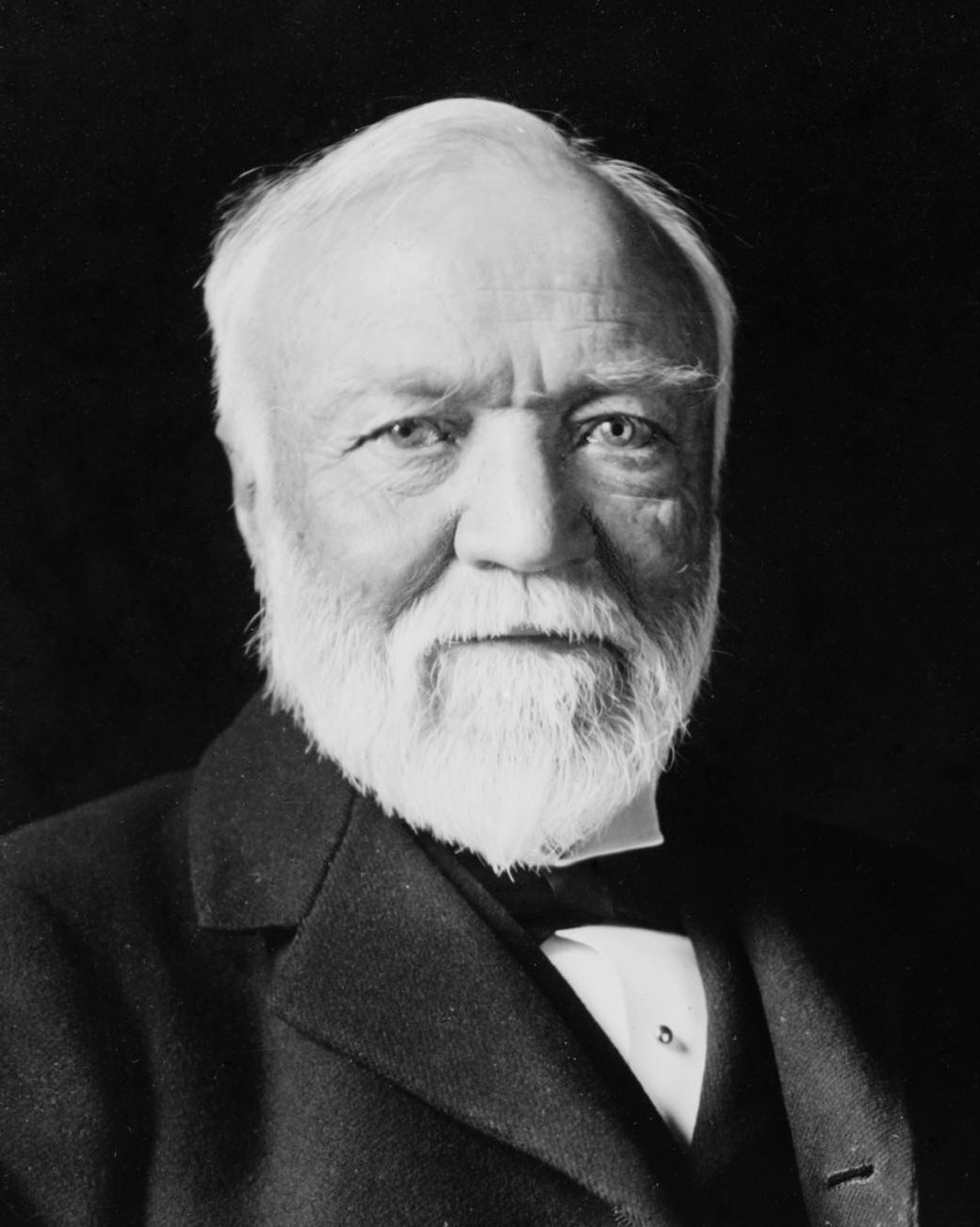
Andrew Carnegie - The Gospel of Wealth

Andrew Carnegie November 25, 1835 – August 11, 1919) was a Scottish American industrialist who led the enormous expansion of the American steel industry in the late 19th century. He was also one of the highest profile philanthropists of his era and had given away 94 percent of his fortune to charities and foundations by the time of his death. His 1889 article proclaiming "The Gospel of Wealth" called on the rich to use their wealth to improve society, and stimulated a wave of philanthropy.


Carnegie was born in Dunfermline, Scotland, and emigrated to the United States with his very poor parents in 1848. Carnegie started as a telegrapher and by the 1860s had investments in railroads, railroad sleeping cars, bridges and oil derricks. He accumulated further wealth as a bond salesman raising money for American enterprise in Europe. He built Pittsburgh's Carnegie Steel Company, which he sold to J.P. Morgan in 1901 for $480 million (the equivalent of approximately $13.6 billion in 2013), creating the U.S. Steel Corporation. Carnegie devoted the remainder of his life to large-scale philanthropy, with special emphasis on local libraries, world peace, education and scientific research. With the fortune he made from business, he built Carnegie Hall, and founded the Carnegie Corporation of New York, Carnegie Endowment for International Peace, Carnegie Institution for Science, Carnegie Trust for the Universities of Scotland, Carnegie Hero Fund, Carnegie Mellon University and the Carnegie Museums of Pittsburgh, among others. His life has often been referred to as a true "rags to riches" story


Modern History Source book:
Andrew Carnegie:
The Gospel of Wealth, 1889
Andrew Carnegie (1835-­1919) was a massively successful business man - his wealth was based on the provision of iron and steel to the railways, but also a man who recalled his radical roots in Scotland before his immigration to the United States. To resolve what might seem to be contradictions between the creation of wealth, which he saw as proceeding from immutable social laws, and social provision he came up with the notion of the "gospel of wealth". He lived up to his word, and gave away his fortune to socially beneficial projects, most famously by funding libraries. His approval of death taxes might surprise modern billionaires!

The problem of our age is the administration of wealth, so that the ties of brotherhood may still bind together the rich and poor in harmonious relationship. The conditions of human life have not only been changed, but revolutionized, within the past few hundred years. In former days there was little difference between the dwelling, dress, food, and environment of the chief and those of his retainers. . . . The contrast between the palace of the millionaire and the cottage of the laborer with us today measures the change which has come with civilization.

This change, however, is not to be deplored, but welcomed as highly beneficial. It is well, nay, essential for the progress of the race, that the houses of some should be homes for all that is highest and best in literature and the arts, and for all the refinements of civilization, rather than that none should be so. Much better this great irregularity than universal squalor. Without wealth there can be no Maecenas [Note: a rich Roman patron of the arts]. The "good old times" were not good old times . Neither master nor servant was as well situated then as to day. A relapse to old conditions would be disastrous to both-not the least so to him who serves-and would sweep away civilization with it....

. . .
We start, then, with a condition of affairs under which the best interests of the race are promoted, but which inevitably gives wealth to the few. Thus far, accepting conditions as they exist, the situation can be surveyed and pronounced good. The question then arises-and, if the foregoing be correct, it is the only question with which we have to deal-What is the proper mode of administering wealth after the laws upon which civilization is founded have thrown it into the hands of the few? And it is of this great question that I believe I offer the true solution. It will be understood that fortunes are here spoken of, not moderate sums saved by many years of effort, the returns from which are required for the comfortable maintenance and education of families. This is not wealth, but only competence, which it should be the aim of all to acquire.

There are but three modes in which surplus wealth can be disposed of. It can be left to the families of the decedents; or it can be bequeathed for public purposes; or, finally, it can be administered during their lives by its possessors. Under the first and second modes most of the wealth of the world that has reached the few has hitherto been applied. Let us in turn consider each of these modes. The first is the most injudicious. In monarchial countries, the estates and the greatest portion of the wealth are left to the first son, that the vanity of the parent may be gratified by the thought that his name and title are to descend to succeeding generations unimpaired. The condition of this class in Europe to­day teaches the futility of such hopes or ambitions. The successors have become impoverished through their follies or from the fall in the value of land.... Why should men leave great fortunes to their children? If this is done from affection, is it not misguided affection? Observation teaches that, generally speaking, it is not well for the children that they should be so burdened. Neither is it well for the state. Beyond providing for the wife and daughters moderate sources of income, and very moderate allowances indeed, if any, for the sons, men may well hesitate, for it is no longer questionable that great sums bequeathed oftener work more for the injury than for the good of the recipients. Wise men will soon conclude that, for the best interests of the members of their families and of the state, such bequests are an improper use of their means.

. . .
As to the second mode, that of leaving wealth at death for public uses, it may be said that this is only a means for the disposal of wealth, provided a man is content to wait until he is dead before it becomes of much good in the world.... The cases are not few in which the real object sought by the testator is not attained, nor are they few in which his real wishes are thwarted....

The growing disposition to tax more and more heavily large estates left at death is a cheering indication of the growth of a salutary change in public opinion.... Of all forms of taxation, this seems the wisest. Men who continue hoarding great sums all their lives, the proper use of which for public ends would work good to the community, should be made to feel that the community, in the form of the state, cannot thus be deprived of its proper share. By taxing estates heavily at death, the state marks its condemnation of the selfish millionaire's unworthy life.

. . . This policy would work powerfully to induce the rich man to attend to the administration of wealth during his life, which is the end that society should always have in view, as being that by far most fruitful for the people....

There remains, then, only one mode of using great fortunes: but in this way we have the true antidote for the temporary unequal distribution of wealth, the reconciliation of the rich and the poor-a reign of harmony-another ideal, differing, indeed from that of the Communist in requiring only the further evolution of existing conditions, not the total overthrow of our civilization. It is founded upon the present most intense individualism, and the race is prepared to put it in practice by degrees whenever it pleases. Under its sway we shall have an ideal state, in which the surplus wealth of the few will become, in the best sense, the property of the many, because administered for the common good, and this wealth, passing through the hands of the few, can be made a much more potent force for the elevation of our race than if it had been distributed in small sums to the people themselves. Even the poorest can be made to see this, and to agree that great sums gathered by some of their fellow ­citizens and spent for public purposes, from which the masses reap the principal benefit, are more valuable to them than if scattered among them through the course of many years in trifling amounts.

. . .
This, then, is held to be the duty of the man of Wealth: First, to set an example of modest, unostentatious living, shunning display or extravagance; to provide moderately for the legitimate wants of those dependent upon him; and after doing so to consider all surplus revenues which come to him simply as trust funds, which he is called upon to administer, and strictly bound as a matter of duty to administer in the manner which, in his judgment, is best calculated to produce the most beneficial result for the community-the man of wealth thus becoming the sole agent and trustee for his poorer brethren, bringing to their service his superior wisdom, experience, and ability to administer-doing for them better than they would or could do for themselves.
Andrew Carnegie, "Wealth," North American Review, 148, no. 391 (June 1889): 653, 657­62